Two Tahoe lakefronts can sit a few doors apart, look similar on paper, and still trade at very different prices. If you are trying to price or purchase in Lake Tahoe's nuanced lakefront market, that disconnect can feel confusing. The good news is there are some key factors in valuing lakefronts around the lake so you can move forward with confidence.
This guide will give you some basic physical, regulatory, and market factors which may be used in determining value. However, there ARE other factors that may need to be considered. Each member of The Moore Team is extremely knowledgeable what it comes to valuing lakefront properties on Lake Tahoe. We are available to assist if you have specific questions or would like to dive deeper and discuss/compare lakefront properties on Lake Tahoe.
Top lakefront value drivers
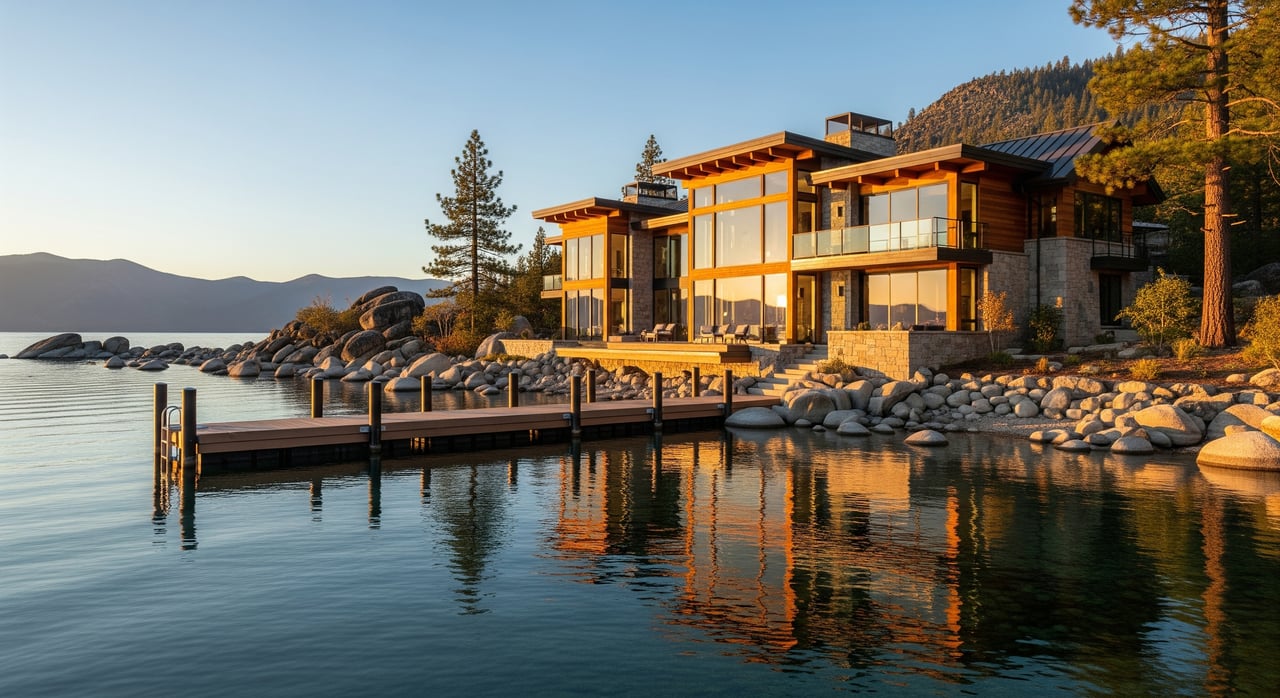
Pier and buoy rights
An existing is a significant value driver. In Tahoe, these approvals are governed by regional and state rules (TRPA, CA State Lands, etc), and transferability matters. A parcel that already holds a valid allocation or permit is typically worth more than a similar upland without one.
Frontage type and usable shoreline
Not all frontage is equal. Deeded shoreline or exclusive access typically commands a premium compared with parcels that rely on recreational or HOA access. Linear frontage length matters, but only when it is usable. A broad sandy or pebble beach is high value, while steep banks or heavy riprap reduce everyday enjoyment and lower relative value.
Water depth and littoral zone
Deep water close to shore is a premium feature. Shallow littoral zones limit swimming and boating and may require longer piers or make mooring difficult. Near‑shore bathymetry directly affects boating convenience and the feasibility of a pier or buoy.
Orientation and views
Orientation shapes sun, views, and comfort. On the North Shore, southwest‑facing frontage often captures more afternoon light and sunsets across open water, which many buyers value. Sites with heavy wind exposure may feel less comfortable and can increase structural demands on piers.
Privacy and adjoining uses
The distance from public beaches, parks, and roads influences perceived privacy. Nearby public amenities can increase foot traffic yet boost demand for some buyers who value convenient access. Adjoining piers, sight lines, and the spacing to neighbors all shift perceived exclusivity and therefore value.
Site constraints and buildability
Setbacks, slope stability, soils, and coverage availability affect what you can build or expand. Driveway slope, parking capacity, and ease of winter maintenance also shape livability and future resale value. Parcels with simple access and a significant amount of coverage often out‑compete lakefronts with similar frontage but tight constraints.
Utilities and services
Proximity and ease for connecting to public sewer and water can be valuable for some buyers who may be planing a remodel or new construction. All homes within the Tahoe basin require sewer hookup and septic tanks are not allowed. Fire departments will require sufficient water pressure for fire suppression, as well as fire truck access. Wildfire risks are increasingly part of buyer due diligence and insurance underwriting.
Legal encumbrances and easements
Easements for utilities or trails, conservation restrictions such as fish habitat zones, public trust concerns, and shoreline encroachments can limit use and future improvements. Title exceptions related to pier leases or shoreline rights can affect price and marketability.
Market context and buyer preferences
Local inventory, the scarcity of permitted piers and buoys, and broader second‑home demand shape the price spread between parcels. Some buyers pay a premium for turnkey with boating access, and others prefer to buy at a discount while acknowledging the risk and time involved to pursue permits or improvements later.
Regulations that change price
Tahoe Regional Planning Agency (TRPA)
TRPA regulates shorezone uses around Lake Tahoe, including piers, buoys, and shoreline modifications. The agency’s shorezone ordinance can limit the number, size, and placement of boating facilities, and approvals are discretionary and often time‑consuming. A parcel with an existing TRPA‑approved pier or shorezone allocation is typically more valuable than a similar parcel without one. You can review the framework on the TRPA shorezone rules.
County permits and reviews
Counties implement TRPA ordinances locally and issue building and grading permits. There are five counties around Lake Tahoe and it is important to know which county a property is in, which could affect the permitting and building process.
State lakebed and public trust oversight
On the California side of Tahoe, state agencies can have jurisdiction over submerged and littoral lands. Structures that occupy sovereign lands may require leases or approvals. Understanding where upland ownership ends and sovereign lands begin is critical for pier rights and long‑term compliance. See the California State Lands Commission guidance on sovereign lands.
Water quality and environmental protections
Work in or near the water often requires environmental review and compliance to protect lake clarity and habitat. Activities such as bank stabilization, stormwater management, or vegetation removal may need approvals in addition to TRPA and county permits.
Private covenants and timing
HOA rules, deed restrictions, or conservation easements can restrict piers, parking, or shoreline use. Shorezone allocations and permits may be limited and take months to years. Timing and uncertainty affect what buyers are willing to pay today.
How a local expert adds value
Small differences in shoreline, depth, orientation, and approvals can shift pricing by six figures. You want a qualified professional that knows which details move the needle, how to verify them, and where local permitting friction can surface. That is where a boutique, high‑touch approach makes a difference.
The Moore Team specializes in North Shore and West Shore lakefronts and has handled over 50 lakefront transactions. We combine high‑level insight with hands‑on coordination of surveys, engineers, and permitting paths so you can act decisively. Whether you are valuing a legacy property or targeting a property that supports your desired lifestyle, we will help you separate signal from noise and position yourself with confidence. If you are ready to talk through a specific lakefront parcel, or would like to discuss the current Tahoe lakefront market as a whole, schedule a conversation with The Moore Team.