Wondering whether a Tahoe lake-view home is worth the premium? You are not alone. Many buyers love the idea of waking up to blue water and mountain light, but they also want to know what they are really paying for, what trade-offs come with that view, and whether lakefront is truly necessary. This guide breaks down how lake views work around Tahoe, what tends to drive value, and how to think through the options with more clarity. Let’s dive in.
Lake view is not one thing
In Tahoe, “lake view” is more of a spectrum than a simple yes-or-no feature. Tahoe Sierra MLS listing forms distinguish between view categories such as Lake, Peek, Filtered, Panoramic-Lake, and Panoramic. Topography is also tracked separately, including partial, upslope, downslope, and flat sites.
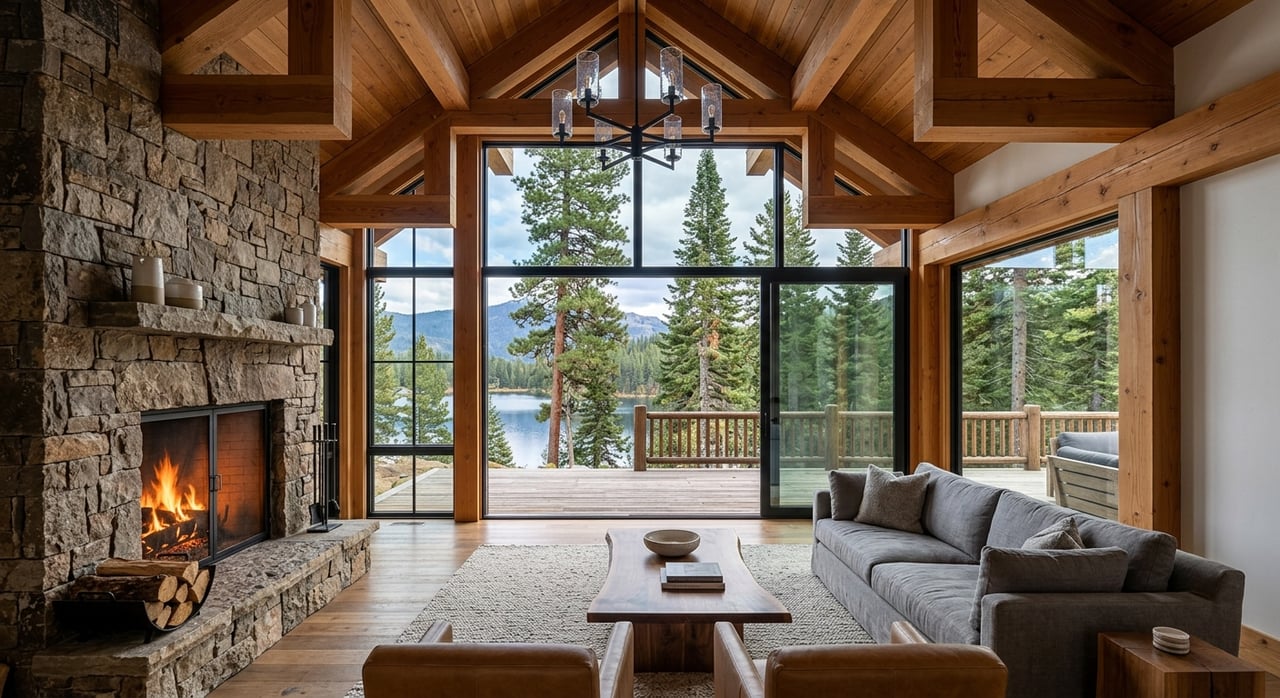
That matters because two homes can both say “lake view” in a listing and still offer very different experiences. One might have a brief slice of water through the trees, while another opens to a broad panorama from several main living spaces. In many cases, the siting of the home and the elevation of the lot shape the experience just as much as the label itself.
Why buyers pay more for views
Across many markets, water views tend to add value. A USDA literature review cites studies showing lake views increasing home values by about 7.5% to 8.3%, with waterfront premiums generally declining as distance from the water increases.
The same review also notes that frontage can contribute heavily to lot value in some lake markets, and that steeply sloped or swampy banks may reduce value. In plain terms, buyers usually pay more for water, but they also price in usability. A beautiful setting still has to work in real life.
Tahoe pricing shows a wider gap
In Tahoe, the spread between true lakefront and non-lakefront homes can be much larger than broad national studies suggest. A North and West Shore micro-market report from Sierra Sotheby’s International Realty showed major pricing differences between lakefront and non-lakefront single-family homes, with lakefront commanding a dramatic premium.
That example should be treated as directional, not as a fixed rule for every property or every year. Even so, it helps explain why many buyers focus on strong-view homes rather than direct shoreline ownership. For many households, a well-positioned lake-view property can offer the emotional appeal of Tahoe at a meaningfully lower entry point than lakefront.
Recent Tahoe Sierra MLS data also shows that North Shore and West Shore single-family homes remain firmly in seven-figure territory. In 1Q2026, average prices were reported at $1.91M on the North Shore and $2.33M on the West Shore, which reinforces why buyers often weigh view quality carefully against budget, location, and house size.
What creates a strong Tahoe view
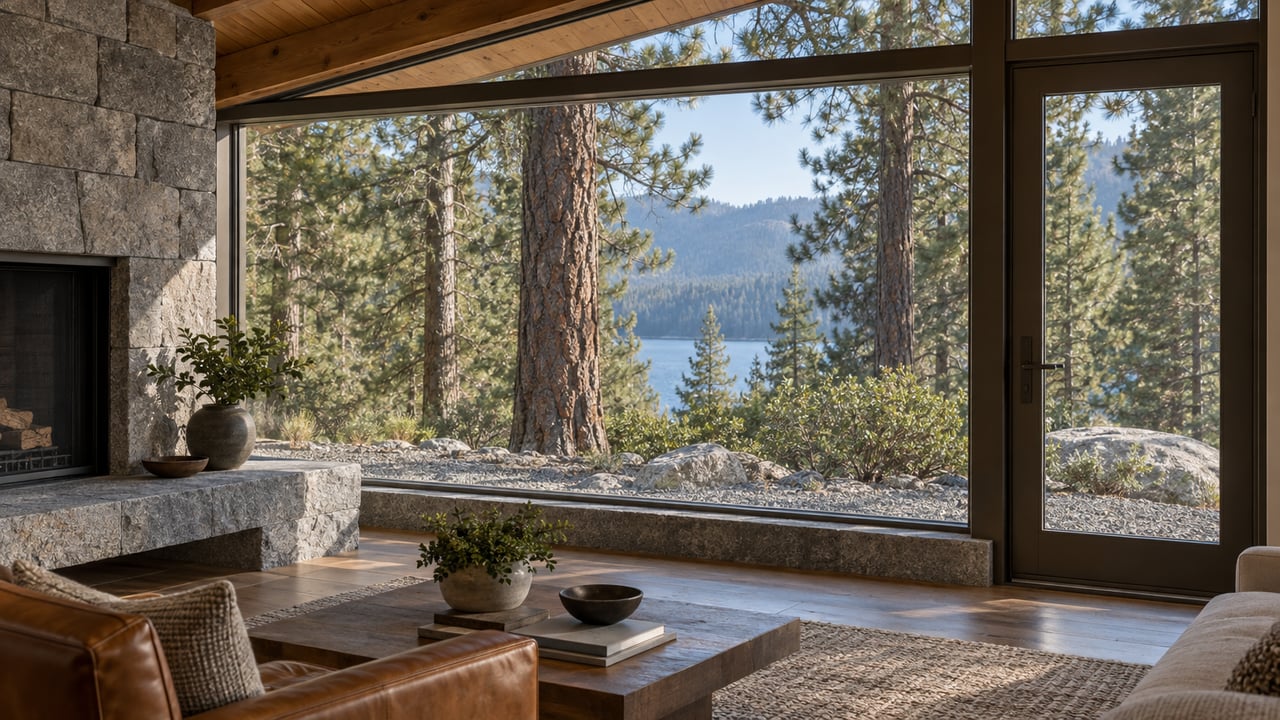
A great Tahoe view is not only about seeing water. It is also about how the water sits within the larger scenic setting of trees, ridgelines, granite, and sky. Buyers are often paying for the full visual composition, not just a blue strip on the horizon.
TRPA treats scenic quality as a major basin-wide issue. Its Scenic Protection Program notes that scenic quality can be affected when development blocks views, removes vegetation, or alters topography. That framework is useful because it reminds buyers that the Tahoe setting itself is part of the property’s appeal.
Lake clarity also plays a role in how people experience a view. USGS reports that Lake Tahoe’s clarity has declined over the last five decades, even though winter clarity has stabilized over the last 20 years. For a view-focused buyer, that means the value proposition is tied not only to a parcel, but also to the long-term health and appearance of the lake.
View quality versus shoreline access
This is one of the most important distinctions to understand. A lake-view home gives you the visual benefit of Tahoe. A lakefront home may give you that same visual experience plus direct daily shoreline use.
Those are not interchangeable benefits. If you want to launch into summer mornings on the water, host by the shoreline, or prioritize immediate access, lakefront can justify a very different price level. If your main goal is to enjoy the scenery from living spaces, decks, and bedrooms, a strong-view property may deliver much of the emotional upside without the full shoreline premium.
Why lakefront has different trade-offs
Lakefront ownership in Tahoe comes with a separate set of practical considerations. TRPA’s Shoreline Plan allows new shorezone structures under caps, permits, and lottery systems, and it authorizes up to 1,486 new private moorings while requiring registration of existing moorings. The plan also enforces a 600-foot no-wake zone, along with added buffers around swimmers, paddlers, and shoreline structures.
In other words, buyers are not just paying for a dramatic waterfront setting. They are also paying for scarcity, direct-use potential, and a highly managed shoreline environment. That can be worthwhile, but it is different from simply buying a home with a view.
Site complexity matters too
Some lake-view homes sit high on the hillside, and that can create amazing sightlines. It can also introduce practical issues that deserve attention. Steeper lots, more challenging access, and site-specific development limits can affect the ownership experience.
TRPA’s land-coverage framework notes that parcel suitability is influenced by factors such as access, stable cut-and-fill slopes, drainage, paved roads, and distance from Lake Tahoe. For buyers, this helps explain why two homes with similar asking prices and similar views may feel very different once you look at ease of use, maintenance, and future project flexibility.
How to compare lake-view options
When you tour Tahoe homes, it helps to move beyond the marketing phrase and ask better questions. The goal is not to decide whether a home has a view. The goal is to understand what kind of view it has, how usable the property is, and what trade-offs are built into the price.
Here are a few smart questions to ask:
- How much of the lake is actually visible from the main living areas?
- Is the view a peek, filtered view, or wide panorama?
- Does the lot’s topography improve the view but complicate access or usability?
- Is the value tied mostly to scenery, or does the property also offer shoreline function?
- How does the house-for-the-money compare with lower-elevation or non-view alternatives?
When a lake-view home makes the most sense
A lake-view home often makes the most sense when you want a balance of visual impact, privacy, and better overall value than lakefront. You may be able to buy more interior space, a more updated home, or a stronger long-term fit for how you actually live in Tahoe.
This can be especially appealing if your typical day looks like coffee on the deck, sunset dinners, and hosting family around the view rather than constant shoreline use. In that case, the premium you pay may align more closely with what you will enjoy most.
When lakefront may be worth the premium
Lakefront tends to make more sense when direct access is central to your lifestyle. If the shoreline itself is the reason you are buying, then the premium may reflect daily utility as much as rarity.
That said, the best lakefront purchase is not always the biggest or most visible one. In Tahoe’s low-turnover micro-markets, the strongest long-term fit often comes from matching access, setting, and complexity to your goals rather than chasing a category label alone.
The real decision is about fit
Most buyers are not choosing between a good property and a bad one. They are choosing between different mixes of view quality, shoreline access, regulatory complexity, and house-for-the-money. That is why two homes with “lake view” in the listing can land in very different value tiers.
The right choice depends on what you want your Tahoe life to feel like day to day. If you understand the difference between visual appeal and functional waterfront living, you can evaluate opportunities with much more confidence.
If you are comparing lakefront, lake-view, or off-market opportunities around Tahoe’s North and West shores, The Moore Team can help you weigh the view, the trade-offs, and the long-term fit with local insight and boutique guidance.
FAQs
What does lake view mean in Tahoe real estate?
- In Tahoe real estate, lake view can range from a small peek of the water to a broad panoramic-lake view, and the lot’s elevation and topography often shape the experience as much as the MLS label.
How much more do Tahoe buyers pay for a lake view?
- Research cited in the report shows lake views can raise home values by about 7.5% to 8.3% in some markets, but Tahoe often shows a wider spread depending on shoreline access, view quality, and scarcity.
What is the difference between lake-view and lakefront homes around Tahoe?
- A lake-view home primarily offers visual enjoyment, while a lakefront home may also offer direct shoreline access, added scarcity, and a different set of regulations and use considerations.
Do Tahoe lakefront homes have more ownership complexity?
- Yes, lakefront properties can involve added shoreline rules tied to piers, moorings, boat access, and no-wake zones under TRPA’s shoreline framework.
Why can two Tahoe homes with lake views be priced so differently?
- Two lake-view homes can vary widely in price because the actual amount of visible lake, topography, siting, access, and overall property usability may be very different.
Are hillside lake-view homes around Tahoe always a better value?
- Not always, because while hillside homes may offer stronger views, site complexity such as slope, drainage, access, and development limits can affect the ownership experience.